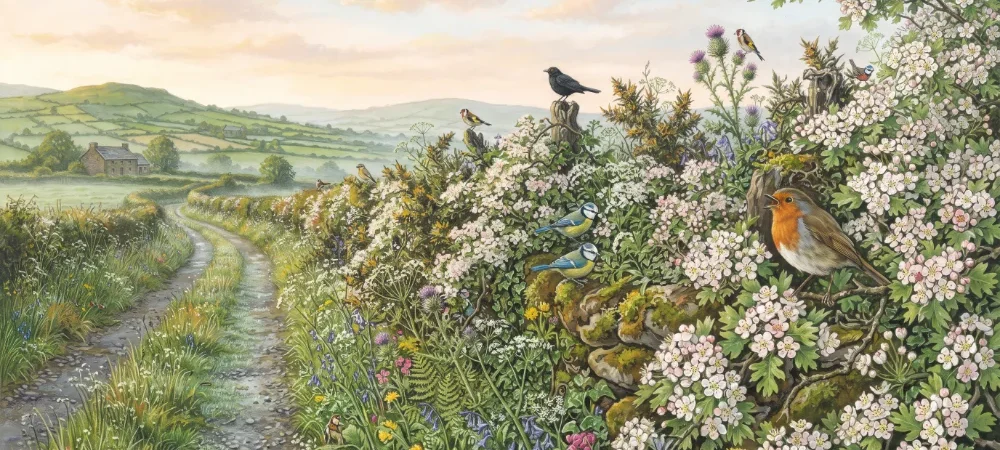
The annual hedge cutting ban is one of the most significant legal restrictions affecting landowners and gardeners in Ireland. Every year, from 1 March to 31 August, it becomes illegal to cut, grub, burn, or otherwise destroy most hedgerows across the country . This restriction is not a matter of local bye-law or seasonal advice; it is enshrined in Section 40 of the Wildlife Act 1976, and it carries real legal and financial consequences for those who ignore it.
This guide sets out the precise dates, the limited circumstances in which cutting is permitted during the closed period, the penalties for non-compliance, and the ecological rationale behind the legislation.
The Dates: When the Ban Applies
The closed season for hedge cutting in Ireland runs from 1 March to 31 August each year . During this period, the default position is that vegetation growing in any hedge or ditch must not be cut, grubbed, burned, or destroyed. The legislation applies to “any land not then cultivated,” which means it covers the vast majority of hedgerows, roadside boundaries, and field margins across the country .
The open season, when hedge cutting is generally permitted, runs from 1 September to 28 February of the following year . This is the window in which landowners, contractors, and homeowners should plan any necessary hedge maintenance work. The date of 1 September is not arbitrary; it follows the end of the nesting season, when the majority of bird species have finished breeding and their young have fledged .
What the Ban Actually Prohibits
The legislation is broader than many people realise. It is not simply a prohibition on “cutting” in the narrow sense of trimming with a hedgerow cutter. The Wildlife Act explicitly prohibits four distinct activities during the closed period:
- Cutting hedges or vegetation
- Grubbing them out, which means removing them at the roots
- Burning vegetation
- Destroying hedges or vegetation by any other means
This means that even if a hedge is being removed to make way for a new fence or a construction project, the work cannot legally proceed during the closed season without a specific exemption. The prohibition applies to the destruction of the vegetation itself, not merely to the act of trimming it.
Limited Exemptions: When Cutting Is Permitted
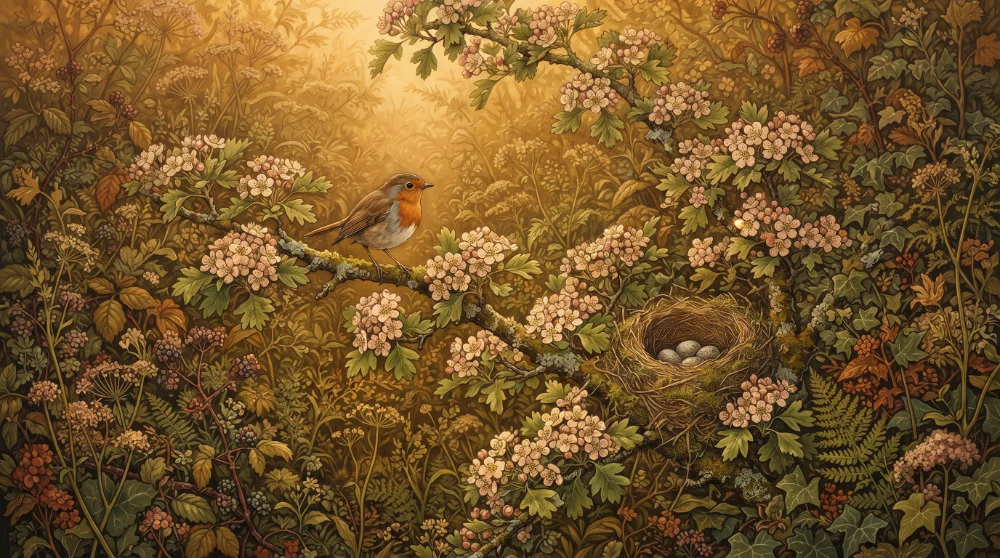
The law provides for a limited number of exemptions. They are narrow and should not be taken to mean a general permission to cut hedges in the summer. Common exemptions cited include:
Road safety “ If a hedge or overgrowth poses a hazard to road users, it may be cut during the closed period to ensure public safety . This is the exemption most frequently invoked by landowners and local authorities. However, it is important to note that the exemption applies to the specific hazard, not to the entire hedgerow. The National Parks and Wildlife Service (NPWS) advises that even when this exemption is used, checks for nesting birds should be carried out before work begins .
Ordinary agriculture and forestry. The Act contains an exemption for the “destruction, in the ordinary course of agriculture or forestry, of any vegetation growing on or in any hedge or ditch” . This exemption has been interpreted to include ordinary gardening and horticulture, which means that routine trimming of garden hedges during the summer may fall within this exemption. However, the exemption is not a blanket permission to undertake large-scale hedge removal or destruction during the closed season.
Roads Act works. Vegetation clearance carried out under Section 70 of the Roads Act 1993, which empowers road authorities to undertake works for road safety and maintenance, is also exempt .
No exemption for burning. It is explicitly stated in government guidance that there is no exemption for the burning of vegetation during the closed period . This is a strict prohibition with no exceptions.
The Penalties: What Happens If You Break the Law
The consequences of illegal hedge cutting are not merely theoretical. The NPWS is serious about enforcement and prosecutions are pursued.
In 2025, the NPWS initiated 17 prosecution cases under Section 40 of the Wildlife Act . Five of these cases concluded successfully, with the most significant penalty being a €14,000 fine imposed in County Laois . The remaining cases were before the courts awaiting outcomes.
Under the legislation, a person convicted of an offence under Section 40 is liable to a Class A fine, which carries a maximum of €5,000 on summary conviction . However, the €14,000 fine in Laois demonstrates that the courts can and will impose penalties that exceed the summary maximum when the circumstances warrant it.
Beyond the direct legal penalty, there is a secondary consequence for farmers. Breaches of the Wildlife Act are cross-reported to the Department of Agriculture, Food and the Marine, and a sanction may be applied under Conditionality to the farmer’s area-based payments . This means that illegal hedge cutting can have a direct financial impact on farm subsidies, in addition to any fine imposed by the courts.
The Ecological Rationale Behind the Prohibition
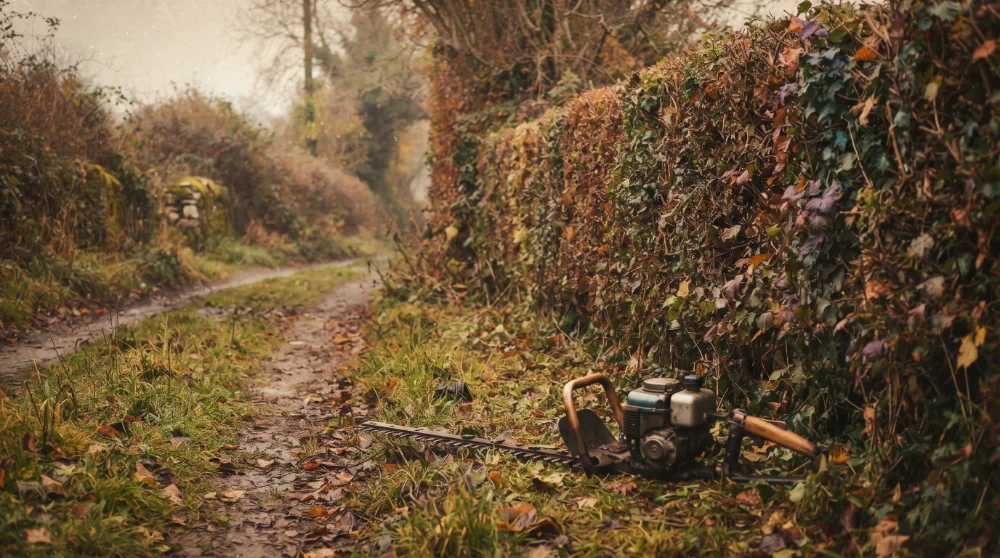
“The prohibition on cutting hedges is not an arbitrary restriction imposed to inconvenience landowners. It exists to protect a critical period in the lifecycle of Ireland’s wildlife.
The months from March to August coincide with the nesting and breeding season for the vast majority of bird species in Ireland. Hedgerows provide essential nesting habitat, food, and shelter for a wide range of birds, insects, and small mammals . Cutting a hedge during this period can destroy active nests, kill nestlings, and eliminate the cover that young birds need to survive their first weeks outside the nest.
Ireland has relatively low native woodland cover compared to other European countries. This makes hedgerows exceptionally important as wildlife corridors and habitats. As government guidance notes, “in Ireland, where there is relatively low cover of native woodland, hedges are of exceptional importance in providing food and shelter and habitats and corridors for maintaining wildlife diversity, particularly for birds, but also for other fauna and for wild plants” .
The decline of bird species is a documented concern. Studies have found that populations of over 20% of bird species in Ireland are in decline . The hedge cutting ban is one of the legislative tools designed to address this decline by protecting breeding birds during their most vulnerable period.
To explore how farmers and conservationists manage hedgerows as vital habitats across the country, you can watch this video:
Practical Guidance for Landowners
For landowners and managers, the practical implications of the ban are straightforward but require advance planning.
Plan hedge work for the open season. Any significant hedge cutting, laying, or removal should be scheduled for the period between 1 September and 28 February. This is the only window in which the work can proceed without the need to rely on a specific exemption.
Check for nests before any permitted work. Even when an exemption applies (for example, road safety), the NPWS advises that checks for nesting birds should be carried out before work begins. If an active nest is found, work should be postponed until the young have fledged .
Be aware of Special Areas of Conservation. Hedge cutting within Special Areas of Conservation (SACs) or Special Protection Areas (SPAs) may require separate consent from the NPWS, regardless of the time of year .
Document any exemption used. If road safety requires cutting during the closed period, it is prudent to keep a record of the hazard identified and the work undertaken. This provides a defence if the activity is later questioned.
Conclusion
The hedge cutting ban is a clear, legally enforceable restriction that applies to all landowners in Ireland. The dates are fixed: 1 March to 31 August. The exemptions are narrow and should not be relied upon as a general permission. The penalties are real, and they are being enforced.
For anyone who manages land in Ireland, understanding this legislation is not optional. It is part of the basic legal framework within which land management operates. The ban protects a vital part of Ireland’s natural heritage during its most vulnerable months, and compliance is both a legal obligation and a contribution to the health of the countryside.