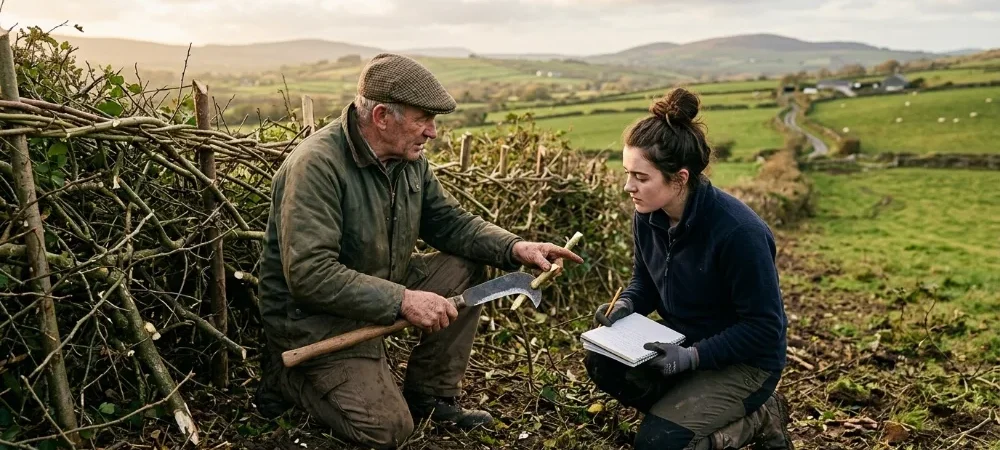
Hedge laying is a craft that has shaped the Irish countryside for centuries. It sits somewhere between farming, ecology, and art. The Hedge Laying Association of Ireland, now known as Hedgerows Ireland, has been at the centre of this tradition since 2004, teaching new generations how to work with the land rather than against it . For anyone who has looked at a gappy, overgrown hedge and wondered how to bring it back to life, this guide is for you.
What Hedge Laying Really Is
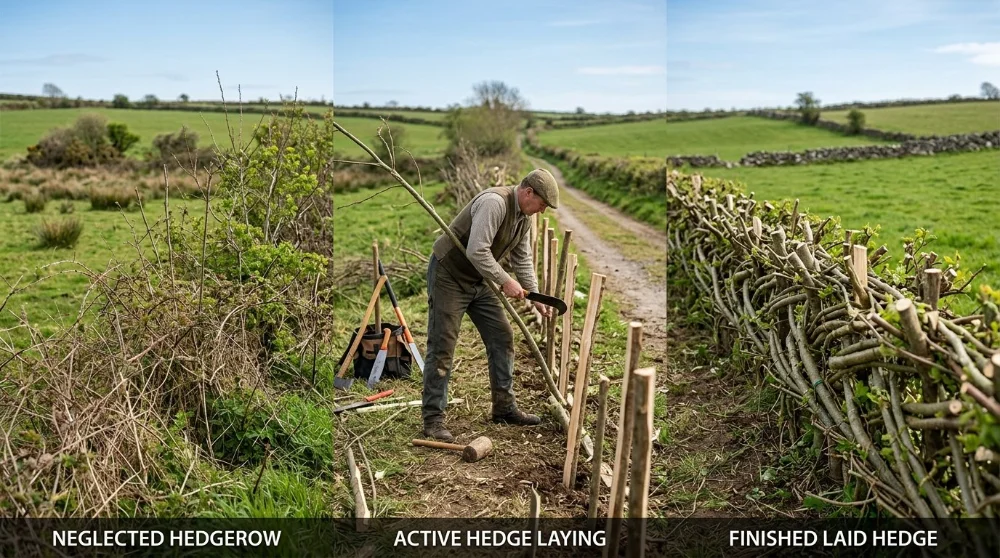
Many people mistake hedge laying for simple trimming or pruning. It is something else entirely. Trimming cuts the top off a hedge and leaves it weak at the base. Over time, this creates a thin line of vegetation with bare stems underneath, a shape that some farmers call a “toilet brush” hedge . Hedge laying does the opposite. It rejuvenates the whole plant . The Hedge Laying Association of Ireland teaches that the goal is to create a dense, living barrier that is stock-proof, wildlife-friendly, and built to last for decades .
The technique involves cutting through the stems of the hedge partway, bending them over, and weaving them together. The stem stays connected to the roots, so the plant does not die. New shoots grow from the base, thickening the hedge from the ground up . This is the brilliance of the method. A properly laid hedge can live almost indefinitely, with each generation of stems being laid in turn.
Why Learn This Skill
The revival of hedge laying is not just about nostalgia. It is about practical benefits that farmers and landowners are rediscovering. Healthy hedgerows provide shelter for livestock, reducing stress and mortality . They intercept runoff and prevent sediment from reaching watercourses . They support a huge range of wildlife, from nesting birds to pollinators. And they draw down carbon from the atmosphere, storing it in the soil . The Hedge Laying Association of Ireland has been promoting these benefits for years, and agri-environmental schemes like ACRES now provide payments for farmers who manage their hedges in this way .
Step One: Choosing the Right Hedge
Not every hedge is suitable for laying. The first task is to assess the condition of the hedge and decide whether it is a good candidate. Hedgerows Ireland advises that the ideal hedge for laying has stems of manageable thickness, typically around 50 to 100 millimetres at the base, and a height of at least two metres . The stems should be flexible enough to bend without breaking. A hedge that has been topped repeatedly for years may have thick, brittle stems that are difficult to lay. In such cases, coppicing might be a better option .
The hedge laying season runs from September to the end of February . This is the dormant period for woody plants, when sap levels are low and stress on the plant is minimised . Work carried out during these months gives the hedge the best chance of recovery and strong regrowth in the spring.
Step Two: Preparing the Hedge
Before any cutting begins, the hedge needs to be prepared. This is called “clearing out” and “facing off” . The hedge layer removes dead wood, weeds, and old fencing. They trim back side growth to get clear access to the base of the stems. The individual stems must be disentangled from one another . This preparation work is essential because it allows the layer to see what they are working with and to make clean cuts.
The preparation also involves deciding which side of the hedge will be the “field” side and which will be the “road” or “ditch” side. The goal is to lay the hedge towards the field, creating a barrier for livestock. Any excess material on the field side is left to help fill the hedge, while material on the other side is removed to allow for machinery access .
Step Three: The Cut and the Pleach
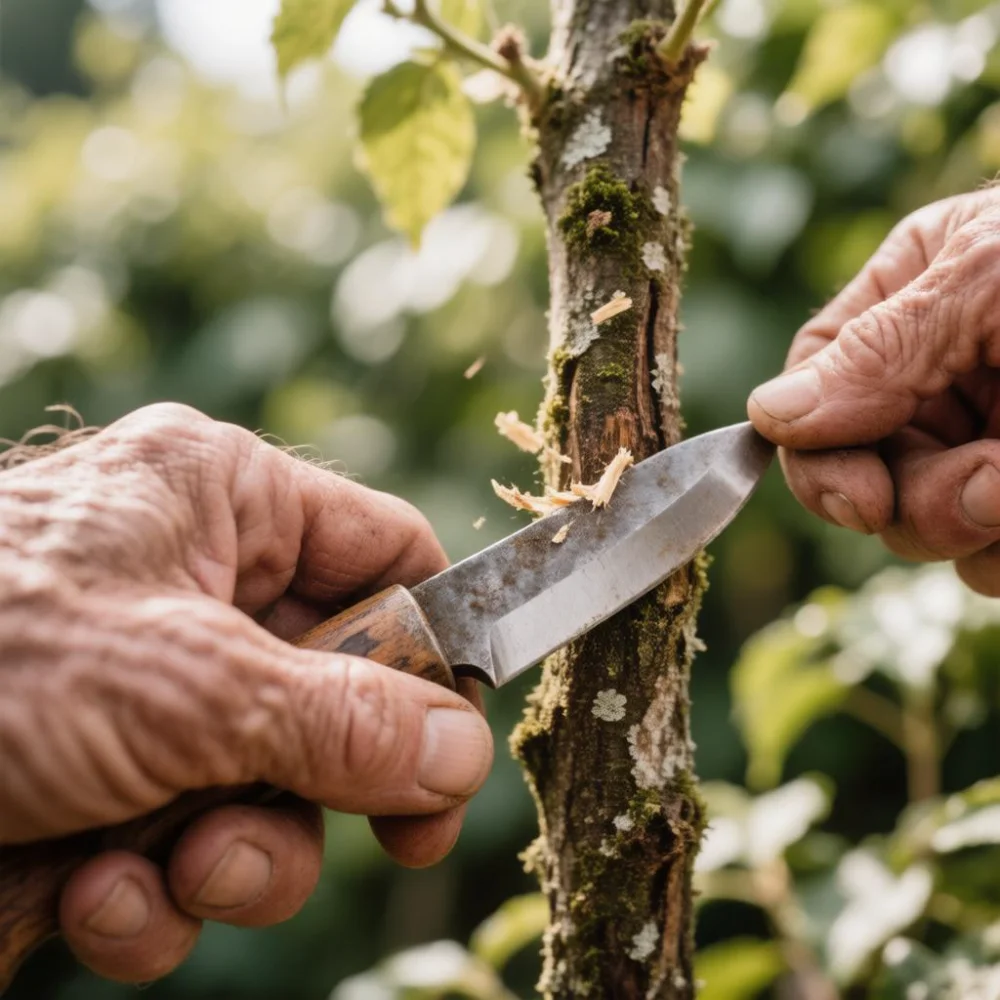
The heart of hedge laying is the cut. The Hedge Laying Association of Ireland teaches that this cut must be made with precision. The stem is cut through approximately four-fifths of the way, leaving a hinge that allows the stem to bend without breaking . The cut should be made at an angle, between one and four inches above the ground . The lower the cut, the better. New shoots will grow from the stump, and if the cut is too high, the regrowth will start too far up the stem, leaving gaps at ground level .
The cut is made on the side of the stem facing the direction the hedge is being laid . Once the stem is bent over, the protruding spike left by the cut must be trimmed away at an angle to prevent water from pooling and causing rot . The bent-over stem is now called a “pleacher” . The hedge layer uses a billhook or axe as a lever, supporting the stem with their free hand as they bring it down into the hedge line . The stem should curve from just above ground level, not snap.
Step Four: Weaving and Staking
Once the stems are bent over, they must be woven together to create a strong, stock-proof structure. This is done by weaving the pleachers in and out of wooden stakes driven into the ground about three feet apart . The stakes provide support for the hedge until the regrowth thickens and the hedge becomes self-supporting . Over time, the stakes and bindings will rot away as the new growth takes over.
In some regions, the hedge is finished with bindings made from fresh hazel or willow fronds. These are woven over the tops of the stakes, creating a continuous weave that holds everything in place . The Hedge Laying Association of Ireland includes this technique in its training courses, but it is not always used in Ireland . The choice of staking and binding depends on the intended purpose of the hedge and the personal style of the hedge layer.
Step Five: Finishing the Hedge
After the stems are laid and the stakes are in place, the hedge needs to be cleaned up. The hedge layer trims away straggly branches and cuts the tops of the stakes at an angle, a couple of inches above the bindings . This prevents water from settling on the cut surface and encourages rot. The result is a neat, dense, living barrier that looks as though it has always been there.
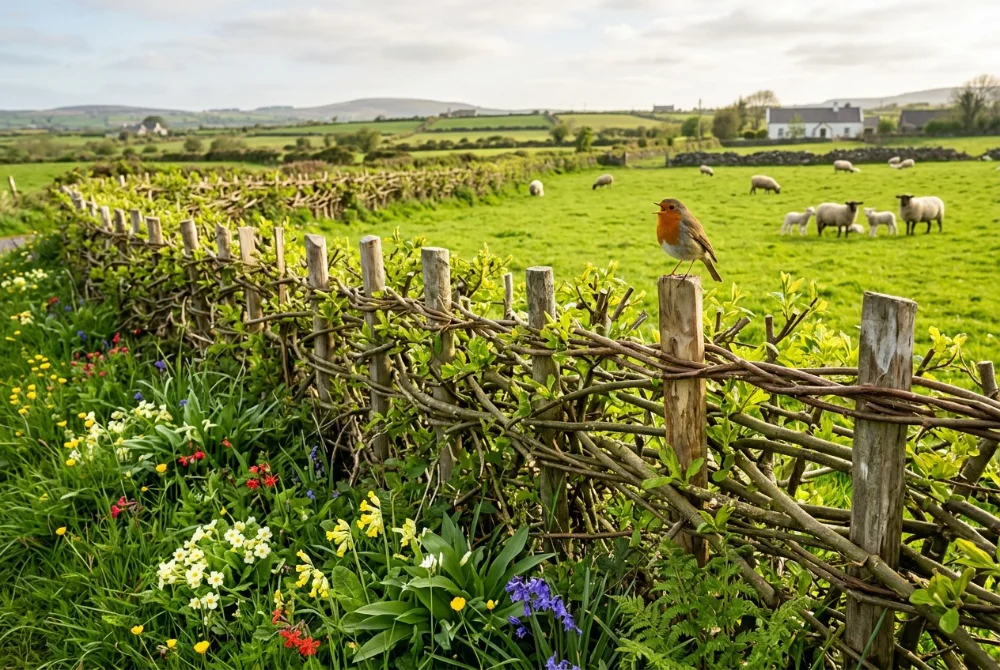
The hedge will look bare for a season, but the regrowth is remarkable. The Hedge Laying Association of Ireland notes that by the following March, new shoots will have started to emerge from the cut stumps. Within eighteen months to two years, the hedge will be thick and stock-proof, bristling with fresh growth . The work may be hard, but the results speak for themselves.
The Role of the Association
The Hedge Laying Association of Ireland, now operating as Hedgerows Ireland, has been central to the revival of this craft. The organisation was founded in 2004 by a group of hedge layers and other interested individuals, with the aim of encouraging the conservation and appropriate management of hedgerows and promoting the profession of hedge laying . The Association has since run training courses, demonstrations, and workshops across the country .
The shift to the name Hedgerows Ireland reflects a broadening of the organisation’s mission. It is no longer just about the craft of hedge laying. It is about the hedgerows themselves, the wildlife they support, the carbon they store, and the farmers who manage them . The Association is a member of the Irish Environmental Network and the Environmental Pillar, putting it at the heart of the national conversation about biodiversity and land management .
The Path Forward
Hedge laying is not just a way to fix a broken hedge. It is a way of thinking about the land. It recognises that boundaries can be alive, that they can serve multiple purposes, and that the old ways often hold wisdom that modernity has forgotten. The Hedge Laying Association of Ireland is committed to passing this wisdom on.
For beginners, the best way to learn is to get hands-on experience. The Association runs introduction courses for novice hedge layers, where participants learn to assess a hedge, use the tools, and make the cuts under the guidance of experienced practitioners . These courses are practical and supportive. They are the first step on a journey that could lead to a deeper connection with the Irish countryside and a skill that will last a lifetime.
The revival of hedge laying is a sign of hope. It shows that farmers and landowners are willing to invest in the future of their land, that they see the value of biodiversity and sustainable management. The Association is there to support them, to teach the skills, and to ensure that this ancient craft continues to shape the Irish landscape for generations to come.