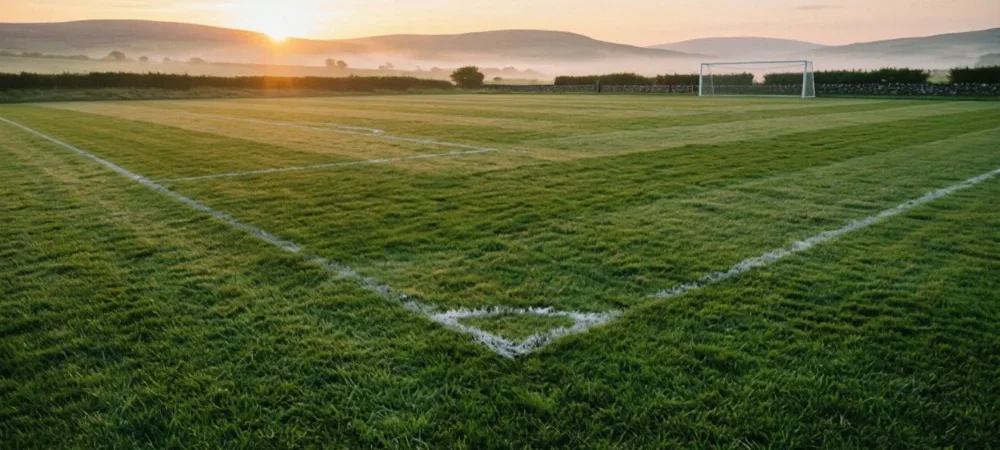
Walk past any village pitch in Ireland on a Saturday morning and you will see something that looks simple. Green grass, white lines, a few goalposts. Nothing complicated. But spend a season with the people who maintain these surfaces and you start to understand that a football pitch is a living thing. It breathes, it drains, it grows, it suffers, and it recovers. Keeping it playable through an Irish year is a skill that sits somewhere between farming and craft.
This article looks at how grounds are kept in good shape across the country, from the small club field to the county ground. It also looks at where the game fits into community life, and how people follow it week to week.
A Climate That Does Not Help
Ireland has a mild, wet climate. Rain falls often, skies stay grey for long stretches, and the ground rarely dries out fully. Winters are soft but damp. Summers are warm but not hot. This is good for grass growth. It is not always good for play.
Grass needs light, air, water, and nutrients. In Ireland, water is rarely the problem. Light and air are. A pitch that stays wet for weeks will compact. Compacted soil pushes out air, and without air the roots weaken. Weak roots mean thin grass. Thin grass means mud. Mud means cancelled matches and unhappy players.
So the work of a groundsman in Ireland is less about watering and more about drainage, air, and timing. Knowing when to stay off the pitch is as important as knowing when to cut it.
Grass Types for Irish Pitches
Not all grass is the same. What works on a GAA field in Kerry may not suit a soccer pitch in Donegal. The mix matters.
Perennial ryegrass is the backbone of most Irish sports surfaces. It germinates fast, wears well, and recovers quickly after damage. It handles foot traffic better than most species. For pitches that host matches every week, ryegrass is the base.
Kentucky bluegrass is sometimes mixed in for density and colour. It spreads slowly and fills gaps, which helps on worn areas. It does not like heavy wear on its own, so it is usually blended with ryegrass.
Tall fescue is tougher and deeper rooted. It copes better with dry spells and poor soil. It is not as soft underfoot as ryegrass, so it is used more on training pitches and outer areas.
Creeping bentgrass is the choice for high-end surfaces. It is fine, dense, and recovers well from low cutting. It needs more care, more water, and more money. You will see it at county grounds and a few League of Ireland venues, not at the local club.
The right mix depends on soil, drainage, budget, and how often the pitch is used. A club with one pitch and three teams will need a tougher blend than a club with two pitches and a groundsman on site.
The Seasonal Round
A pitch is not maintained in one go. It is maintained in cycles. Each season asks something different.
Autumn
Autumn is about repair. After a summer of matches, the surface is worn. Bare patches appear in goalmouths and along the centre. This is the time to overseed. Seed is spread over thin areas and brushed into the soil. A light topdressing of sand or soil follows. This gives the seed contact with the ground and protects it from birds.
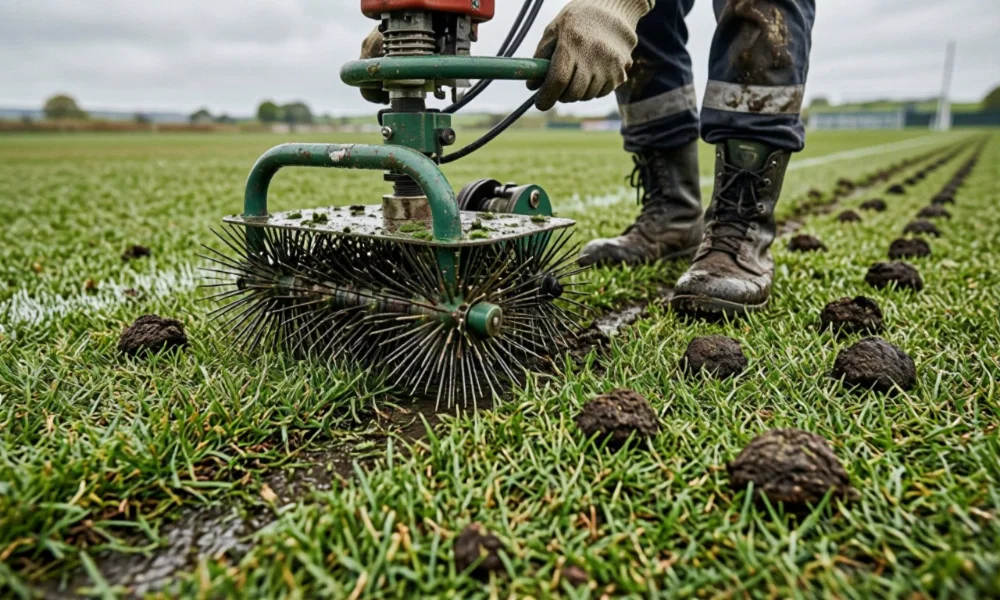
Autumn is also the time for aeration. A machine pushes holes into the soil to let air and water move. This breaks up compaction that built up over the season. Some clubs use a slitter, which cuts narrow slots into the surface. Others use a spike roller. The goal is the same: open the ground.
Winter
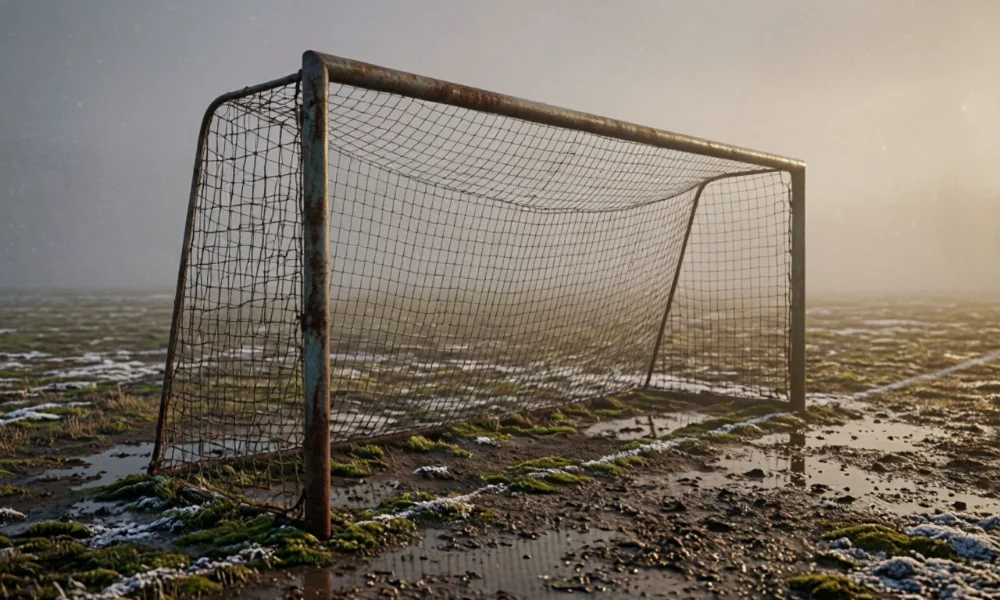
Winter is about protection. Growth slows. The ground stays wet. Play continues, but the pitch suffers. The main job is to limit damage.
Goal mouths take the worst of it. Some clubs move goalposts slightly to spread the wear. Others put down boards or mats in front of the goal. Some simply accept that winter football leaves marks, and plan to repair in spring.
Drainage matters most now. If water sits on the surface, the pitch becomes unplayable. Sand slits, French drains, and surface grading all help. So does staying off the pitch on days when it cannot take traffic.
Spring
Spring is about recovery. Growth returns. This is the time for heavier work.
Aeration is done again, often deeper this time. Overseeding fills the gaps left by winter. Fertiliser goes down to push growth. The first cuts are light, just to tidy the surface. As growth strengthens, cuts get lower and more frequent.
Spring is also when many clubs do their main renovation. This can mean scarifying, which removes dead material from the base of the grass. It can mean topdressing with sand to level the surface. It can mean re-seeding large areas. The work is heavy, but it sets up the pitch for summer.
Summer
Summer is about play and presentation. Growth is strong. Cutting is frequent. Lines are painted. The pitch looks its best.
Watering matters more now. A pitch that dries out will lose colour and slow down. But watering is not always possible. Many clubs rely on rain and hope for a wet summer. Others have irrigation, but it is expensive and not common at lower levels.
Cutting height matters. Too short and the grass weakens. Too long and the ball does not roll true. Most pitches are cut between 25 and 40 millimetres, depending on the level of play. Higher-level pitches are cut shorter, lower-level pitches a bit longer.
The Problems That Never Go Away
Three problems come up again and again on Irish pitches.
Moss
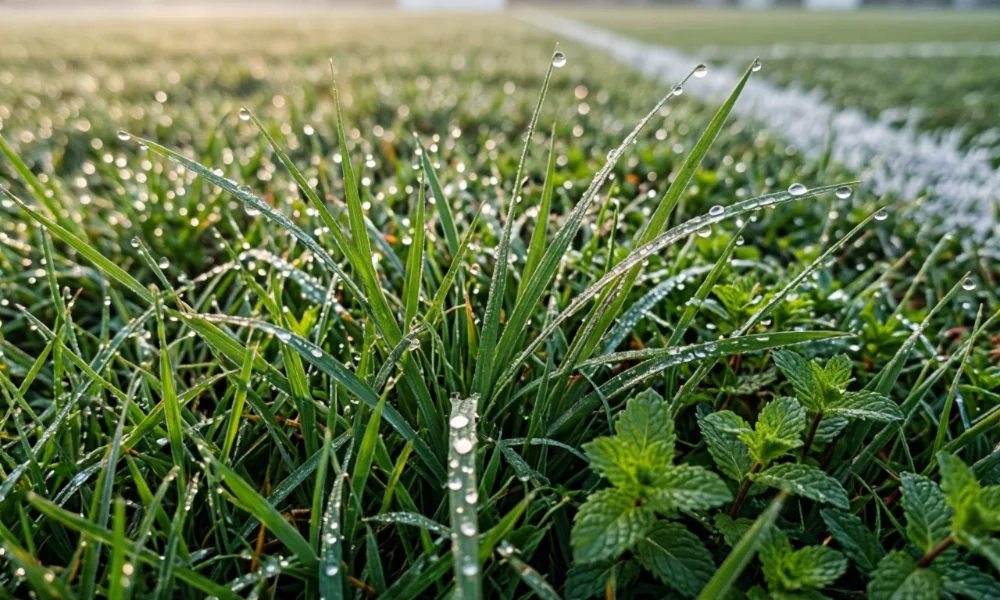
Moss likes wet, compacted, low-nutrient soil. In other words, it likes many Irish pitches. It spreads in the base of the grass and takes light and air from the roots. It makes the surface soft and slippery.
The fix is not just to kill it. The fix is to change the conditions. Aerate to open the soil. Improve drainage. Apply the right fertiliser. Cut back overhanging trees and hedges that block light. Moss is a symptom, not the cause.
Fungus
Damp conditions bring fungal disease. Red thread, fusarium, and dollar spot all appear on Irish pitches. They show as patches of discoloured grass, often after warm, wet spells.
Prevention is better than cure. Good airflow, correct cutting height, and balanced feeding all help. When disease appears, fungicide can be used, but it is not a long-term answer. A pitch that is well managed will resist most disease on its own.
Wear
Wear is the constant enemy. Goal mouths, centre circles, and touchlines take the most traffic. Wear shows as bare soil, then as mud, then as a pitch that cannot be played on.
The answer is rotation and rest. Move goalposts. Rotate training areas. Give the pitch time to recover. Where two pitches exist, alternate them. Where only one exists, reduce training on it. This is not always possible, but every club should try.
Amateur and Professional: Two Different Worlds
It is worth being clear about the gap between levels.
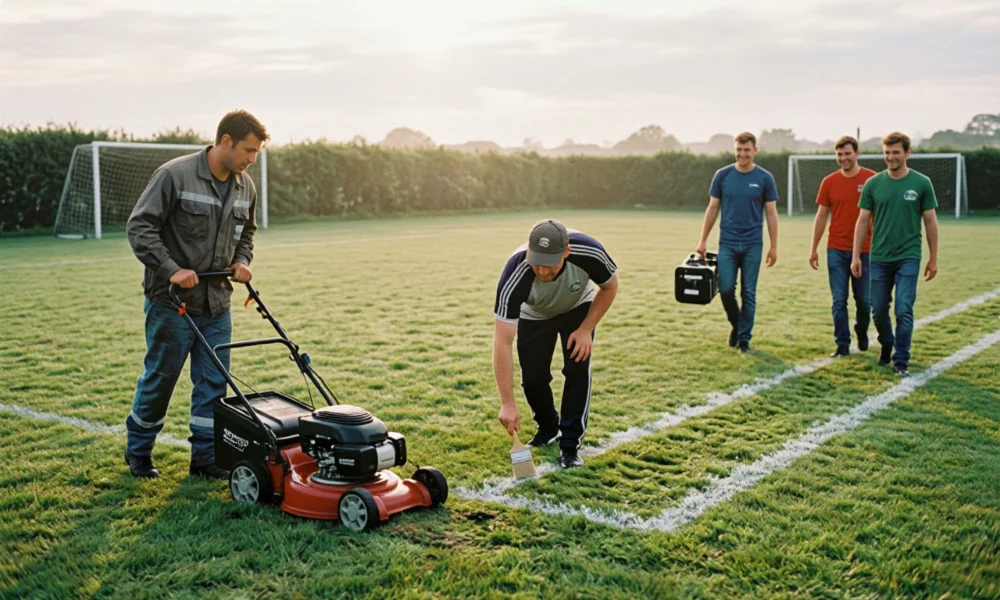
An amateur club pitch is usually maintained by volunteers. The work is done on evenings and weekends, around jobs and families. Equipment is basic. A tractor, a mower, a roller, a set of forks. Budget is small. The aim is to get the pitch playable, not perfect.
A professional pitch is a different operation. It has a full-time groundsman, or a small team. It has irrigation, drainage, and heating in some cases. It has a mower for every height. It has a soil lab on call. The aim is consistency, week after week, season after season.
The difference is not just money. It is time and knowledge. A volunteer can learn the basics, and many do. But a professional has the hours to do the work when it needs doing, not when they are free.
That said, some amateur pitches are better than some professional ones. A small club with a dedicated groundsman and a good drainage system can produce a surface that plays well all year. Pride matters as much as budget.
The Role of Clubs and Communities
A pitch is not just a piece of ground. It is a meeting place. On match days it brings people together. On training nights it gives young players somewhere to go. In small towns, the pitch is part of the identity of the place.
Keeping it in good shape is a community effort. Volunteers mow, line, repair, and raise funds. Local businesses sponsor equipment. Parents help with work days. The club committee makes decisions about when to play and when to rest the surface.
This is not just about football. It is about keeping a place that matters alive. A pitch that is looked after tells people that the club is serious and that the community cares. A pitch that is neglected sends the opposite message.
Following the Game
For those who follow Irish football, knowing where matches are played and how competitions are organised is part of the pleasure. The League of Ireland runs a full season. The FAI Cup brings drama. Local leagues run their own campaigns. Schools, colleges, and underage teams all play their part.
Keeping track of fixtures, results, and standings is easier than it used to be. Information about football events is gathered on resources such as online football hubs, where fans can see what is coming up and follow the season as it unfolds. It is a useful reference for anyone who wants to stay close to the game without chasing scores across a dozen websites.
The link between the pitch and the game is direct. Good surfaces produce good football. Good football brings people in. People who come in support the club. The club looks after the pitch. The circle closes.
A Living Surface
A football pitch in Ireland is not a static thing. It changes with the weather, the season, and the traffic it takes. It asks for attention, patience, and a bit of local knowledge. It rewards that attention with playable, safe, and enjoyable surfaces.
The work behind it is quiet. You will not see it on a Saturday afternoon. But it is there in every well-cut line, every firm goalmouth, and every game that goes ahead when the forecast said rain. It is a craft, like hedge laying, and it deserves the same respect.
Grass grows. Grounds get worn. People repair them. That is the story of Irish football at every level, from the smallest village field to the biggest ground in the country.