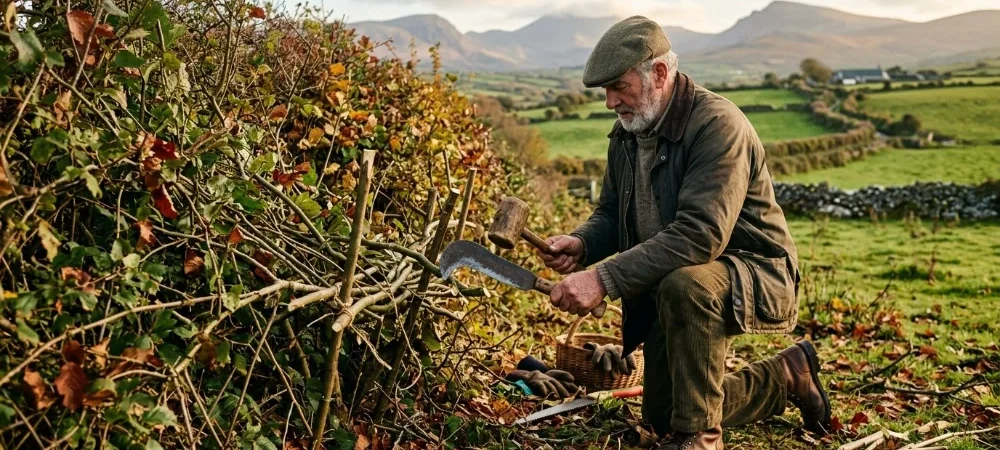
Across the Irish countryside, a quiet but powerful transformation is taking place. The old boundaries that once shaped the land and provided shelter for generations are being carefully brought back to life. The Hedge Laying Association of Ireland has watched this revival unfold. Farmers, landowners, and those who care for the land have been turning back to a skill that was almost lost, finding in it a way to restore both the landscape and the wildlife that depends on it.
A History Carved in the Land
The story of Ireland’s hedgerows is deeply woven into the story of the land itself. Many of these boundaries are not recent additions to the countryside. Some trace their origins back to medieval times or even earlier, marking the edges of town lands and ancient territories. Archaeological evidence suggests that bank-and-ditch boundaries, known as clas, existed as far back as the Neolithic and Bronze Ages, from around 3500 to 700 BC . These ancient features were not just practical divisions of the land. They were statements of ownership, markers of community, and living records of how people shaped their world.
Most of the hedgerows that are familiar to people today were planted during the 1700s and 1800s. This was a period when Parliament passed laws obliging landowners to establish proper permanent boundaries between their properties. The requirements were specific. Ditches were to be dug to set dimensions, and then planted with whitethorn, crab apple, or other quick-growing species. In wet ground, sallows, alder, and other moisture-loving plants were recommended . These Acts of Parliament created the patchwork of fields that still defines so much of the Irish countryside.
By the early twentieth century, hedge laying had become a common and respected skill. It was the practical way to maintain these boundaries, keeping them stock-proof and vigorous. The technique was well understood. A hedge layer would take the woody stems, cut them partly through near the base, and then bend them over, laying them at an angle. The stem remained connected to the roots, so it did not die. Instead, new growth would shoot up from the cut base, creating a dense, thick barrier that would last for decades. It was an art that required knowledge of the land, an understanding of plants, and a steady hand.
The Decline and the Attempted Erasure
The middle of the twentieth century brought profound changes to farming and the countryside. The post-war era saw a push for modernisation, for efficiency, and for a more mechanised approach to agriculture. Wire fencing became cheaper and easier to install. It did not need the skilled labour that hedge laying required. It did not take years to grow. The old methods began to seem outdated, like a reminder of a slower, less productive past.
The practice of hedge laying went into decline. Many hedgerows were simply removed to create larger fields, better suited to the new machinery that was transforming farming. Others were neglected, left to grow wild and gappy. Mechanical methods of trimming, such as flailing, took over. This was faster, of course, but it was also harmful. The repeated cutting of the top growth encouraged the hedge to become thin and weak. The base remained open, providing little shelter for birds or small mammals. The cut material fell into the hedge, blocking light and encouraging the growth of brambles and ivy. A hedge that had once been a thick, living wall was reduced to a line of bare stems with a thin canopy on top .
By the 1950s, hedge laying had largely disappeared from the Irish countryside. The skill was no longer being passed on to younger generations. The knowledge of how to assess a hedge, how to cut the stems correctly, how to weave them together with stakes, was at risk of being lost forever. It was a quiet erosion of the country’s cultural and ecological heritage.
A New Era of Recognition
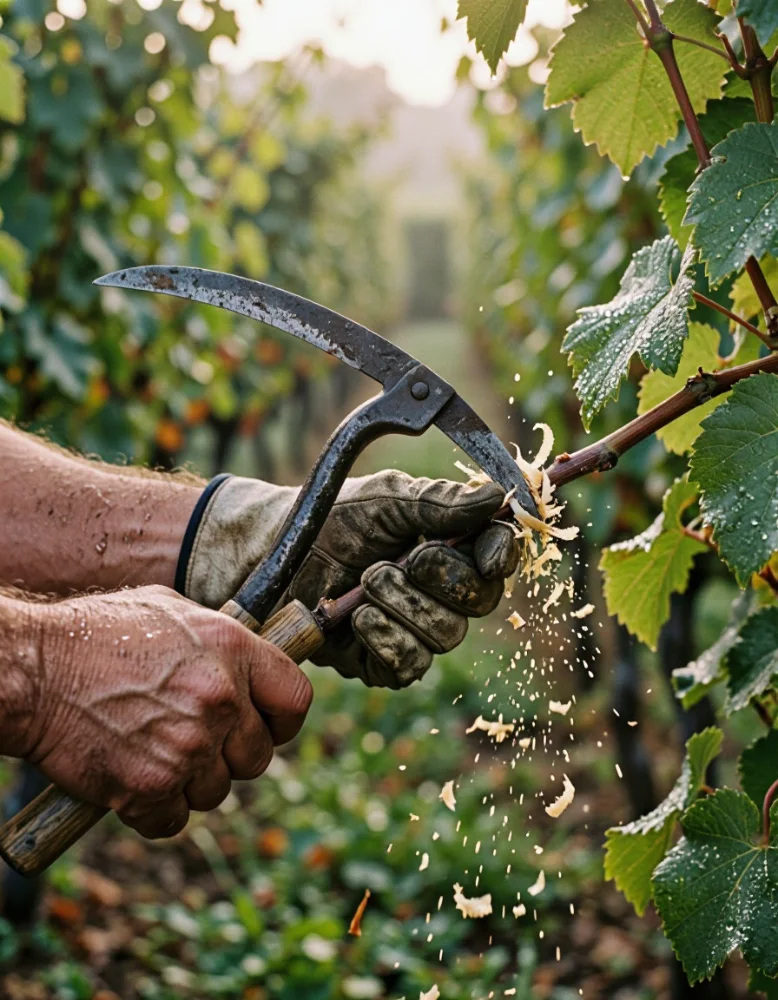
The turn of the twenty-first century brought a shift in thinking. Growing awareness of biodiversity loss, climate change, and the value of traditional skills led to a renewed appreciation for what hedgerows offer. The Irish countryside began to be seen not just as a place of production, but as a landscape with deep ecological and historical value.
The introduction of agri-environmental schemes provided a practical incentive. The Rural Environmental Protection Scheme, known as REPS, was the first significant program to encourage farmers to manage their hedgerows in a more traditional way. This was followed by the Green Low-Carbon Agri-Environment Scheme, or GLAS, which included measures specifically for hedgerow management . These programs recognised that the work of maintaining hedgerows had a public value. It was not just about farming. It was about preserving biodiversity, protecting water quality, and managing the landscape for everyone.
The most recent and ambitious of these schemes is ACRES, the Agri-Climate Rural Environment Scheme. This new program, with its budget of 1.5 billion euro, is designed to support up to 50,000 farm families in Ireland. It includes specific payments for planting new hedgerows and for managing existing ones in ways that benefit wildlife and the climate . The scheme aims to build on the successes of GLAS and to deliver targeted action for biodiversity across the country .
These schemes have been a catalyst for change. Farmers who might have seen hedgerows as just a boundary to be trimmed are now seeing them as an asset to be managed. They are learning that well-maintained hedgerows can provide shelter for livestock, reduce soil erosion, and support pollinators. The old craft of hedge laying, once seen as obsolete, is now being promoted as a solution to modern problems.
An Ecological Lifeline
The true value of hedgerows becomes clear when the land is seen through the eyes of the wildlife that depends on it. Ireland has lost a great deal of its native woodland over the centuries. Hedgerows have become a substitute habitat, a network of linear woodlands that criss-cross the country, providing food, shelter, and corridors for movement . They are living arteries in a landscape that has been transformed.
The statistics are revealing. Of the 110 bird species that are regularly recorded in the Countryside Bird Survey during the breeding season, 55 use hedgerows. Of these, 35 species nest in hedges that are at least 1.4 metres high and 1.2 metres wide. These dimensions are crucial. They provide cover from overhead predators and from ground predators. The dense base that is created by proper hedge laying is particularly important. It is where small birds and mammals find safety .
Hedgerows are not just for birds. The network of hedges provides corridors of movement for bats. Ireland has nine resident bat species, and all of them use hedgerows for feeding and for roosting. The bats travel along the hedges, using them as navigation routes and as hunting grounds. The insects that are drawn to the flowers of the hawthorn and the blackthorn provide a valuable food source . For the 77 species of solitary bees, the 21 species of bumblebees, and the single species of honey bee found in Ireland, hedgerows provide vital food and nesting sites. With a third of Ireland’s bee species under threat of extinction, the value of these habitats cannot be overstated .
The ecological benefits extend below ground as well. The root systems of hedgerows regulate water movement and help to prevent flooding. They trap silt and soil particles, preventing them from entering watercourses and clogging fish spawning grounds. They improve water quality and help to prevent the spread of airborne diseases . A healthy hedgerow is a complex ecosystem, supporting a wide web of life. A poorly managed hedge is a shadow of what it could be.
The Carbon Question
In recent years, another dimension has been added to the understanding of hedgerows. They are increasingly recognised for their role in carbon sequestration. Teagasc, the agriculture and food development authority, has been researching this area since 2010. The findings are significant .
The total length of hedgerows in Ireland has been estimated at 689,000 kilometres. This represents approximately 186,000 hectares when an average width is considered. Research has shown that the way a hedgerow is managed has a direct impact on how much carbon it can store. Intensively managed hedgerows, those that are trimmed every year and kept narrow, have limited benefits for carbon or biodiversity. Less intensively managed hedgerows that are allowed to grow wider and taller, and that are managed on a cycle, contain significantly higher amounts of carbon . The average above-ground biomass stocks of hedgerows across all types have been assessed at approximately 58 tonnes of carbon per hectare.
The implications for Ireland’s climate targets are important. If hedgerow removals exceed the carbon that is accumulated in newly established or growing hedges, then the hedgerow network as a whole can become a source of emissions. This is a crucial point. Managing hedgerows well is not just about biodiversity. It is also part of the effort to tackle climate change. Allowing hedgerows to grow out to 1 metre on each side and upward can increase carbon sequestration by between 1 and 2 tonnes of carbon per hectare per year. This is a meaningful contribution that can be made across the agricultural landscape .
Hedgerows can make a significant contribution to carbon sequestration, according to the Minister for Agriculture, Food and the Marine. This is in addition to the biodiversity and water quality benefits they provide, which supports the continued viability and sustainability of the agri-food sector . The research conducted by Teagasc, in conjunction with other organisations, has helped to improve national estimates of hedgerow carbon sequestration. It has been found that increasing hedge width and height can substantially increase both above and below ground carbon sequestration, while also providing increased biodiversity .
The Return of the Craft
The revival of interest in hedge laying is not just about economics or ecology. It is also about the craft itself. There is a beauty and a satisfaction in the work that goes beyond its practical benefits. Skilled hedge layers are once again being sought out for their expertise. They are the custodians of a tradition that was nearly lost.
The Hedge Laying Association of Ireland has been central to this revival. The Association was founded in 2004 by a group of hedge layers and other interested individuals. Their aim was to raise awareness about the value and appropriate management of hedgerows, to promote the craft and profession of hedge laying, and to document the hedgerow heritage of Ireland . The Association has run training courses, organised demonstrations, and connected practitioners with landowners.
In 2009, the Association received a grant from the Heritage Lottery Fund for a project called ‘Hands on Hedges’. This project aimed to research the tradition of hedge laying by revisiting sites that had been demonstrated by George Midgley, a hedge layer from Yorkshire, during his visit to Northern Ireland in the 1930s. The project also included a programme of activities and events to encourage more people to become involved in the craft . This was a crucial step in ensuring that the knowledge was passed on.
The Association has also responded to emerging threats. There is growing concern about the spread of diseases like Fireblight, which poses a serious risk to hawthorn, one of the most important species in Irish hedgerows. The Association has highlighted the danger that is being introduced through imported saplings, which are sometimes used to meet planting demands under agri-environmental schemes. There is a recognition that protecting hedgerows means protecting them from disease as well as from neglect.
A Future of Living Boundaries
The renewed interest in hedge laying is a hopeful development. It suggests a shift in how people relate to the land and to the traditions of the past. There is a growing awareness that the old methods are not just quaint but are often more effective and more sustainable than modern alternatives.
The hedge laying season runs from September 1st to the end of February . This is the period when the woody plants are dormant and the work can be done without causing undue stress. The work itself is a kind of conversation with the land. The hedge layer must read the hedge, understand its species, its condition, and its history. They must make decisions about which stems to cut, which to lay, and how to weave them together. It is a craft that demands knowledge, skill, and patience.
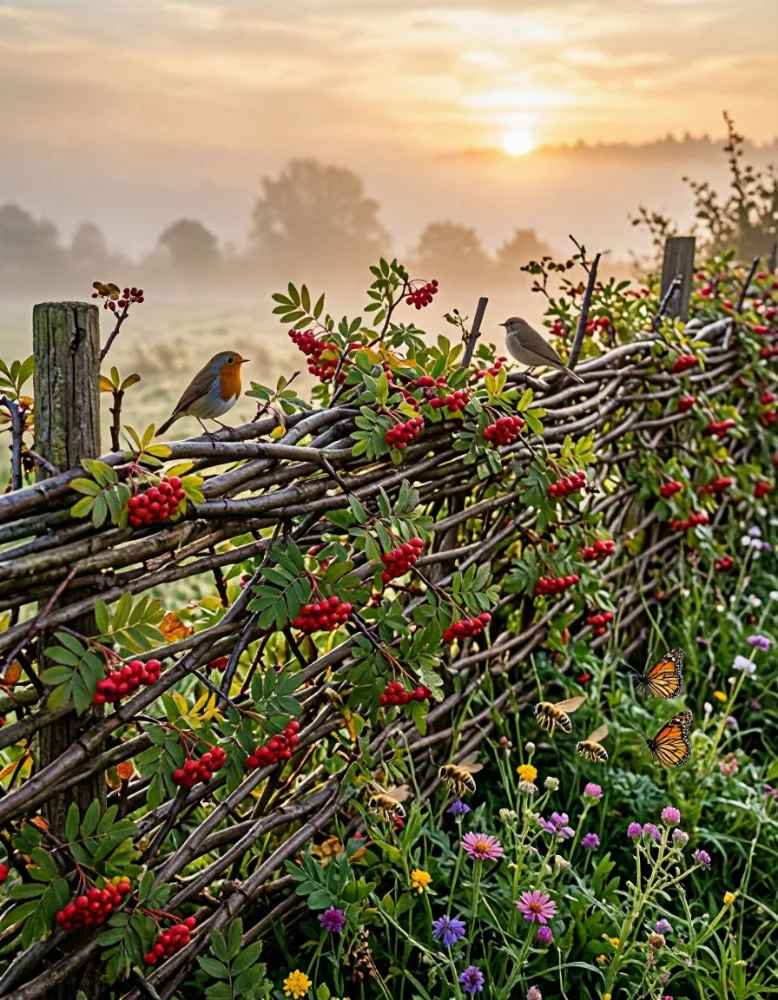
The laid hedge that results from this careful work is a thing of beauty. It is also a thing of great practical value. The dense, woven structure is stock-proof, providing a durable and effective barrier. It is a windbreak, offering shelter to livestock and to crops for up to thirty times the height of the hedge. It is a corridor for wildlife, a larder for birds and insects, and a green artery running through the countryside. It is a boundary that is alive, that changes with the seasons, and that will continue to grow for decades to come.
The work of the Hedge Laying Association of Ireland is ensuring that this ancient craft has a future. By teaching the skills, advocating for the hedgerows, and connecting people with the land, the Association is helping to create a landscape that is richer, more resilient, and more beautiful. The quiet revival that is taking place across the Irish countryside is a reminder that some things are worth preserving. The old ways are often the best ways when it comes to working with nature and creating a sustainable future for the land.